
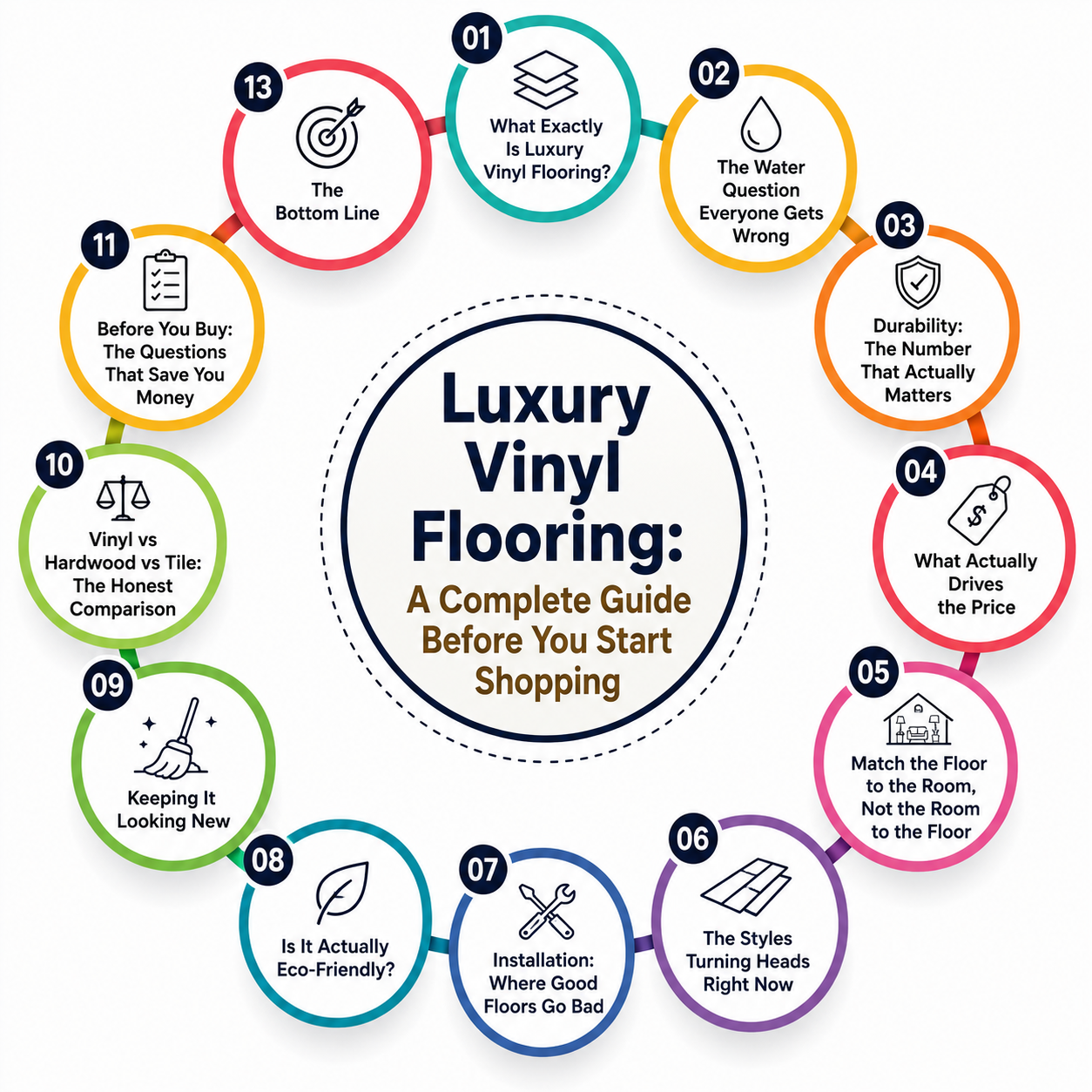
Picture this: you've finally decided to rip out that tired old carpet or cracked kitchen tile. You start scrolling flooring options online, and within ten minutes you're drowning in terms like "SPC core," "wear layer," and "click-lock installation" — none of which meant anything to you an hour ago. Sound familiar?
You're not alone. Luxury vinyl flooring has become one of the fastest-growing choices for Australian homes, but it's also one of the most misunderstood. This guide cuts through the jargon and gives you exactly what you need to know before you set foot in a showroom — so you walk in confident, not confused.
All Floors Bendigo
What Exactly Is Luxury Vinyl Flooring?
Forget everything you remember about vinyl flooring from decades past. That thin, slippery sheet vinyl in your grandmother's kitchen has nothing to do with what's sold today. Modern luxury vinyl is a genuine engineering upgrade — a multi-layered product built to fool the eye into thinking it's timber, stone, or ceramic, while quietly outperforming all three in the areas that actually matter day-to-day.
It comes in two main forms: Luxury Vinyl Plank Flooring (LVP), shaped and grained to mimic timber boards, and Luxury Vinyl Tile Flooring (LVT), textured to resemble natural stone or ceramic tile. Same core technology underneath, completely different personality on top — one brings warmth, the other brings polish.
The Water Question Everyone Gets Wrong
Here's a mistake that trips up more homeowners than anything else: assuming all vinyl is waterproof simply because it's vinyl. It's not that simple, and getting it wrong can be an expensive lesson.
Waterproof vinyl flooring uses a sealed, rigid core that won't swell or warp even if left wet — genuinely built for bathrooms, laundries, and flood-prone areas. Water-resistant vinyl, on the other hand, can shrug off the odd spill but isn't designed to sit in standing water. The two terms get used almost interchangeably in casual conversation, but they're not the same product, and if you're flooring a bathroom, this distinction matters more than the colour you pick.
The fix is simple: ask directly. Don't assume — confirm the exact rating before you commit.
Durability: The Number That Actually Matters
If there's one spec worth memorising before you shop, it's this: wear layer thickness, measured in miles. It's the single biggest factor separating a floor that looks tired in three years from one that still looks brand new in fifteen.
Think of it like this — a thin wear layer is a light raincoat, fine for the occasional drizzle. A thick wear layer (20 mils or more) is a proper storm jacket, built for the daily grind of kids, pets, moving furniture, and life happening on top of it. If your household sees any real foot traffic, this is not the spec to compromise on to save a few dollars per square metre.
Core type matters too. Rigid cores (SPC/WPC) feel sturdier underfoot and are more forgiving of an imperfect subfloor, while flexible cores are lighter and often more budget-friendly for lower-traffic spaces.
What Actually Drives the Price
Vinyl pricing can feel like a mystery until you know what you're looking at. The real cost drivers are wear layer thickness, core type, plank dimensions, and how convincing the printed design and texture actually are up close.
Here's the trap: the cheapest option per square metre isn't always the cheapest option over the life of the floor. A budget product with a thin wear layer might need replacing well before a mid-range option even shows signs of wear — meaning you pay twice. Factor in installation and underlay costs upfront so there are no surprises halfway through your reno.
Match the Floor to the Room, Not the Room to the Floor
One of the most common (and costly) mistakes homeowners make is picking one vinyl product and using it everywhere. But your kitchen and your bedroom don't live the same life.
Kitchens need waterproof, slip-resistant vinyl that can handle daily spills and grease without blinking.
Bathrooms and laundries demand fully waterproof products with sealed edges around wet zones.
Living rooms and bedrooms are lower-stakes on moisture, so comfort underfoot and acoustic backing become the priority.
Hallways and entryways cop the most foot traffic and grit — a thicker wear layer here pays for itself.
Home offices with rolling chairs need a firmer, scratch-resistant surface, where rigid cores tend to win.
Thinking room-by-room, rather than "one floor fits all," is how you get years more life out of your investment.
The Styles Turning Heads Right Now
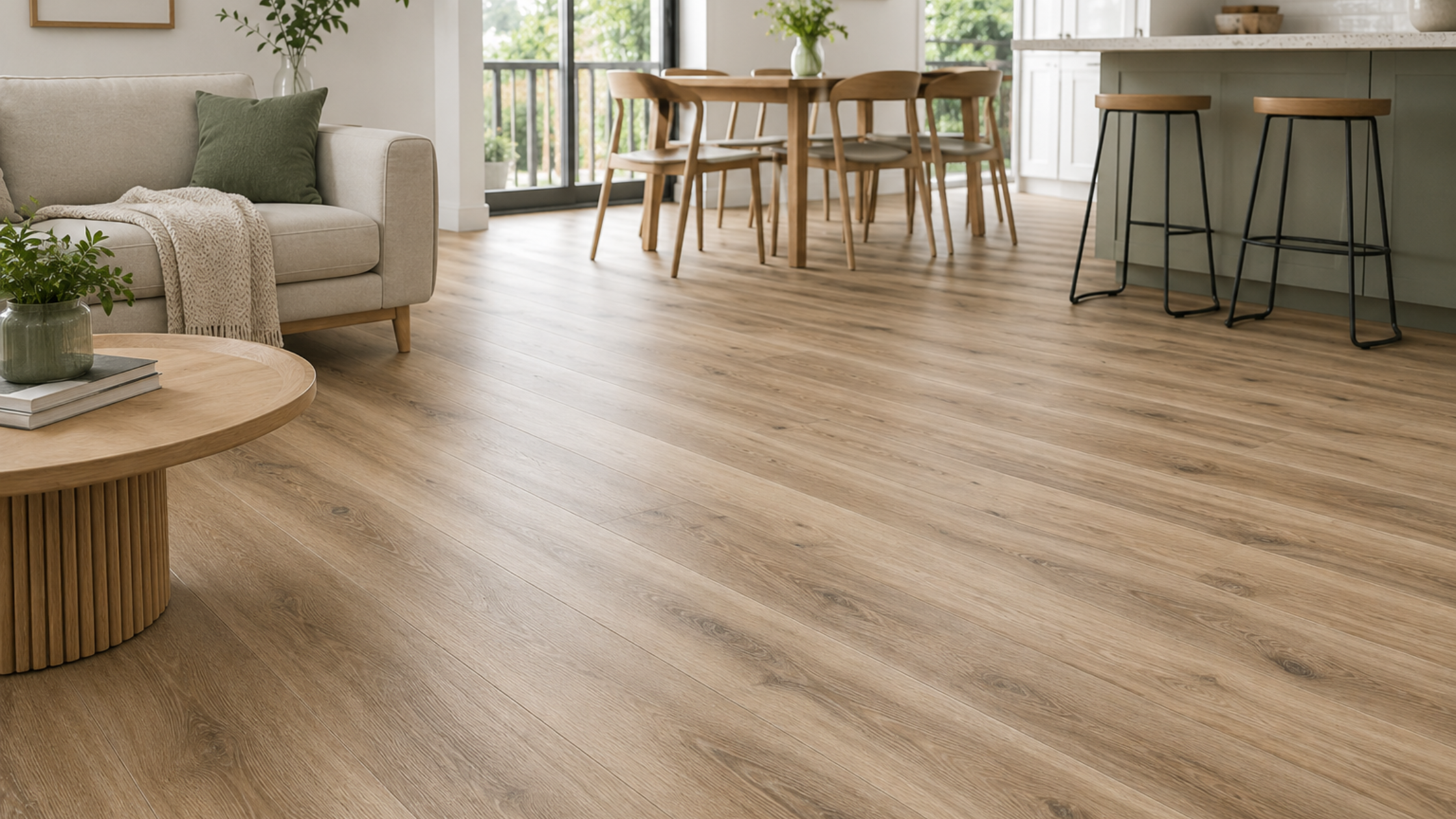
Vinyl's biggest transformation isn't performance — it's looks. Today's ranges replicate European oak, reclaimed barnwood, Carrara marble, and raw concrete with embossed textures that genuinely fool the hand as well as the eye. Wide-format planks are having a moment for their seamless, expansive feel, while herringbone-laid vinyl tiles are giving homeowners a designer statement floor without the designer invoice.
On colour, warm honey timber tones and soft greige are pushing out the cool greys that dominated a few years back — a shift toward floors that feel inviting rather than clinical. Matte, low-sheen finishes are also winning over high-gloss, simply because they hide daily life (dust, footprints, minor scuffs) far more forgivingly.
Installation: Where Good Floors Go Bad
Vinyl flooring installation comes in three flavours: click-lock (floating), glue-down, and loose-lay. Click-lock is the DIY darling — pieces snap together without adhesive, which makes it tempting for a weekend project. Glue-down offers a more permanent, stable result favoured in high-traffic settings. Loose-lay uses the product's own weight to stay put, which makes future repairs easy.
Here's the part nobody tells you upfront: the product is rarely where DIY installations fail — the subfloor is. Uneven concrete, leftover adhesive, hidden moisture, skipped acclimatisation time, ignored expansion gaps — any one of these can turn a beautiful floor into a buckled, gapped mess within a year. It's not that DIY is impossible; it's that the boring 20% of the job (subfloor prep) determines 80% of the result.
Is It Actually Eco-Friendly?
Fair question, since vinyl is PVC-based. The honest answer: it's come a long way, but it's not automatically "green" just because a brand says so. Look for low-VOC or phthalate-free formulations and ask directly about indoor air quality certifications if that's a priority for your household — a reputable supplier should have straight answers, not vague marketing language.
Keeping It Looking New
The good news — luxury vinyl is refreshingly low-maintenance:
Sweep or vacuum regularly to stop grit from scratching the surface
Mop with a vinyl-approved cleaner, not harsh abrasives
Use furniture pads under heavy pieces
Add curtains or blinds in sun-drenched rooms to prevent fading
Wipe up spills promptly, even on waterproof products
Small habits, big payoff over the years.
Vinyl vs Hardwood vs Tile: The Honest Comparison
There's no universally "best" flooring — only the best fit for how a room is actually used. Luxury vinyl wins on water resistance, comfort, and low upkeep. Hardwood wins on timeless character and resale appeal, but hates moisture. Natural stone or tile wins on sheer durability but loses on cost and warmth underfoot. The smartest homes don't pick one winner — they mix and match based on room by room needs.
All Floors Bendigo
Before You Buy: The Questions That Save You Money
Ask every supplier: What's the wear layer thickness? Is this genuinely waterproof or just water-resistant? What does the warranty actually cover — product, installation, or both? Is underlay included or extra? What installation method is recommended for this specific product? These aren't "gotcha" questions — they're the difference between a floor that ages well and one that becomes a five-year regret.
Why Local Advice Beats Online Guides Every Time
Guides like this one are a great starting point — but no article can show you how a plank actually looks in your kitchen's afternoon light, or tell you whether your specific subfloor needs extra prep. That's where a real conversation with a local team pays off.
All Floors Bendigo offers exactly that — hands-on guidance across the full spectrum of Luxury Vinyl Flooring, from budget-friendly waterproof ranges to premium wide-plank designs, backed by professional vinyl flooring installation that protects your investment long after the samples leave the showroom.
If you're comparing Flooring Bendigo options, talking to a team that actually understands local homes and conditions will save you more time and money than any amount of online research.
The Bottom Line
Luxury vinyl flooring earns its popularity honestly — it looks the part, performs under real pressure, and doesn't demand the maintenance budget that timber and stone do. The homeowners who end up happiest are the ones who look past the pretty finish and ask the right questions first: wear layer, waterproof rating, installation method, and room-specific fit. Get those right, and you'll have a floor that still looks brand new long after the "new floor" excitement wears off.
-
It depends entirely on the product. Genuinely waterproof ranges use sealed rigid cores that won't swell even when soaked, while water-resistant products only handle occasional spills. Always confirm the exact rating before buying.
-
LVP mimics timber boards; LVT mimics stone or ceramic tile. Same core construction, different finish — the choice comes down to the look you want in each space.
-
Often, yes — over concrete, timber, or existing vinyl — provided the subfloor is flat and structurally sound. A professional check is the safest first step.
-
With a solid wear layer and correct installation, 15–20 years is realistic in a moderately busy home. Thicker wear layers and rigid cores extend that further.
-
Click-lock systems make DIY possible, but subfloor prep is where most home installs go wrong. Professional installation protects both the finish and your warranty.
